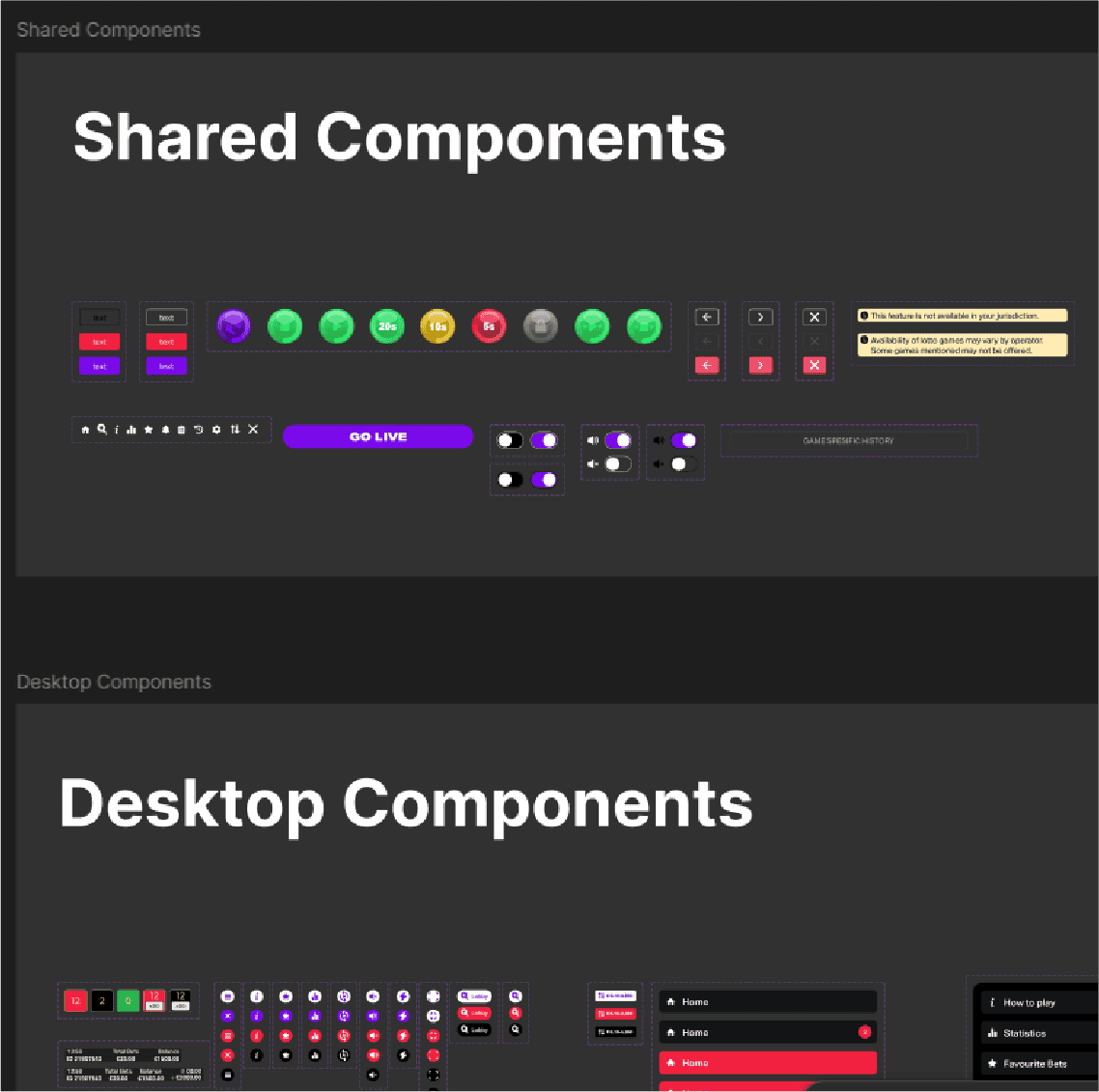
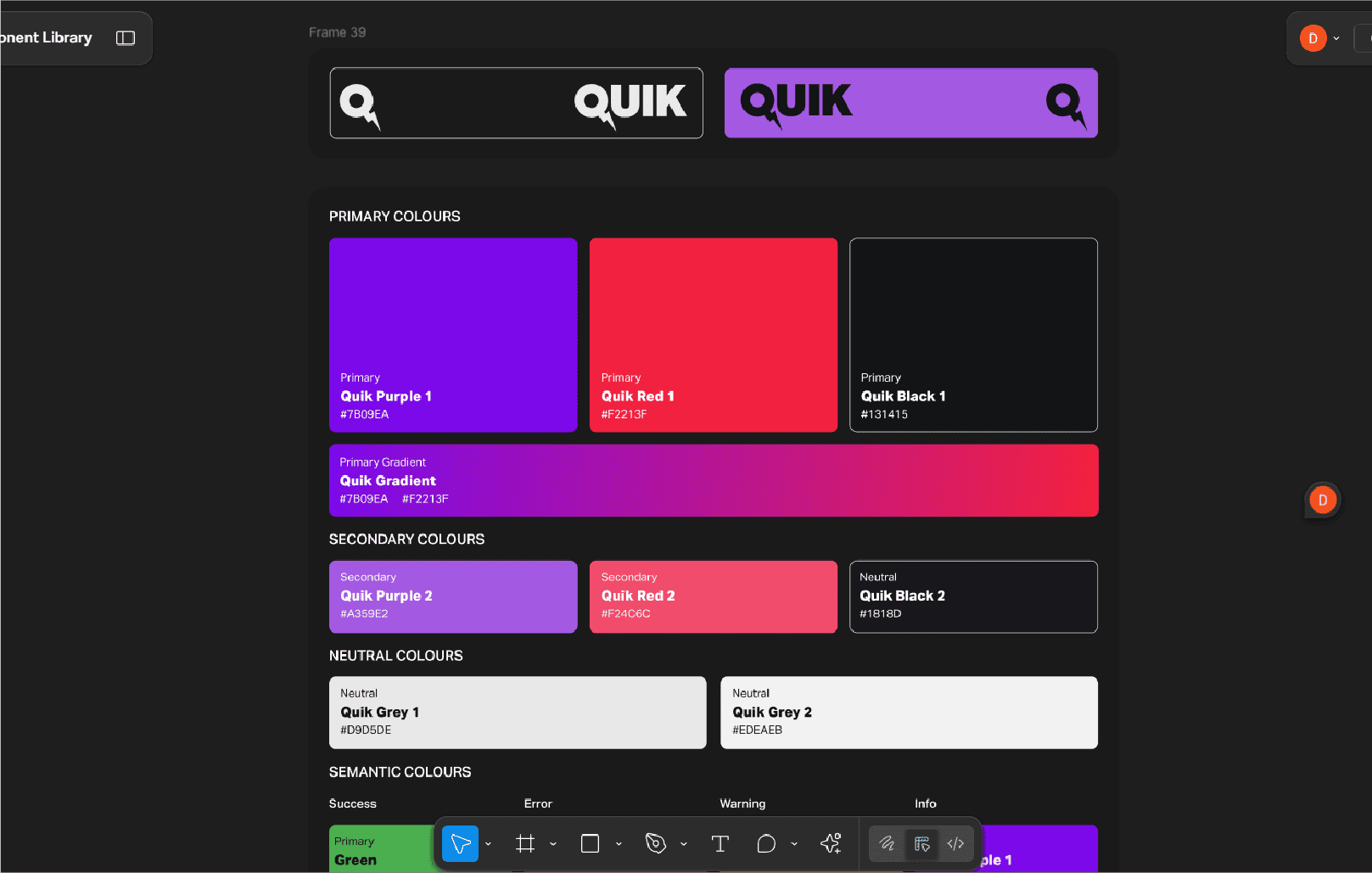
The QUIK Design System (QDS) is a unified interface library designed to manage all shared UI elements across the entire QUIK gaming ecosystem — including both Lotto and Casino titles.
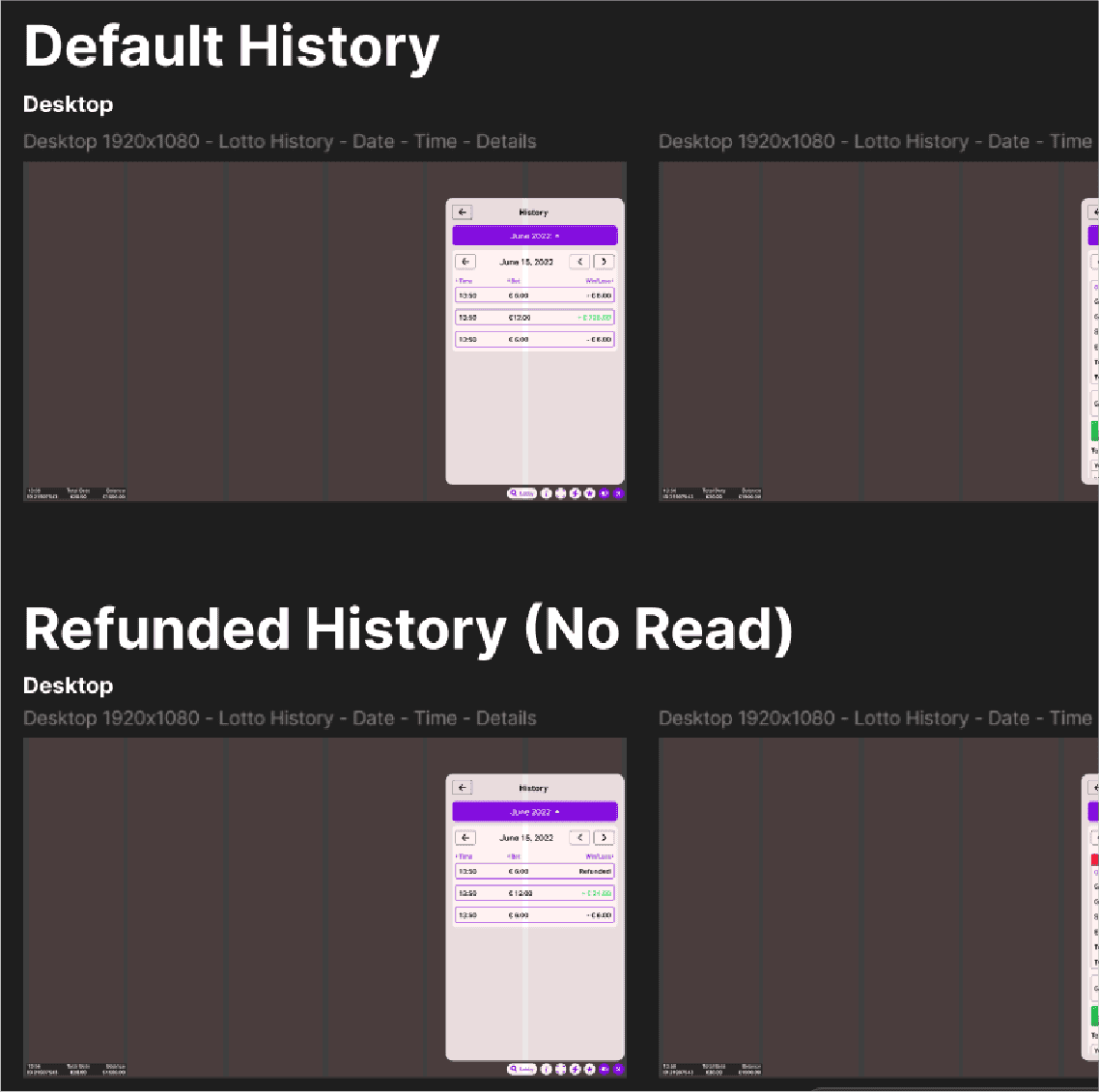
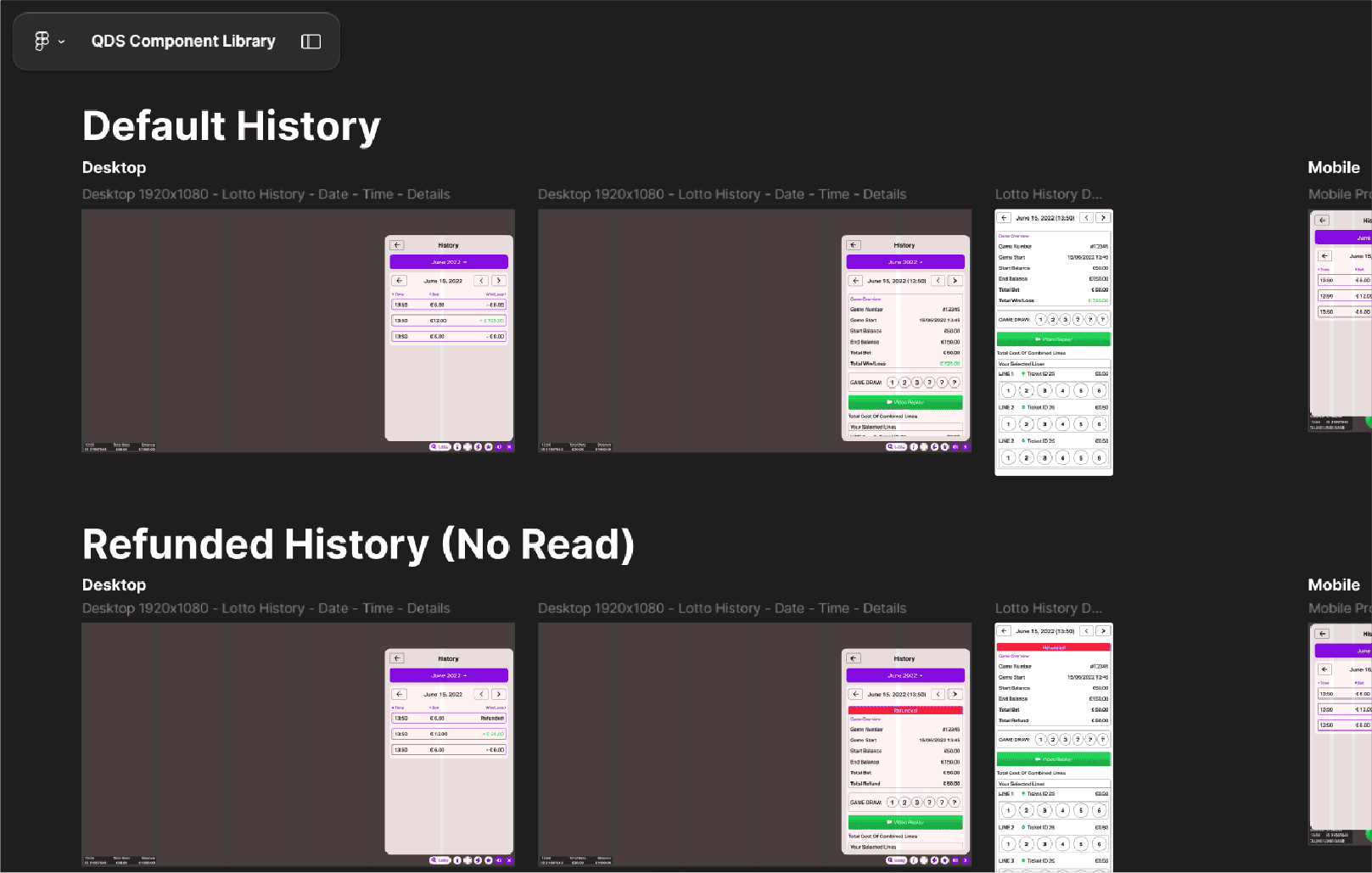
Unlike the Lotto UI Kit, which focuses on brand-specific layouts and visual design for individual Lotto games, QDS functions as an external foundation layer. It standardizes global UI patterns such as menus, player statistics, history, settings, and navigation systems, which appear consistently across every QUIK product.
By abstracting these shared interface elements into a standalone system, QDS enables QUIK to scale faster, maintain consistency across genres, and simplify developer integration — regardless of the game’s theme, layout, or brand skin.
Project Case Study
1. The Objectives:
We needed a system that would:
Create a centralized, reusable library for cross-game UI patterns.
Ensure consistency across all products — from Lotto to Casino.
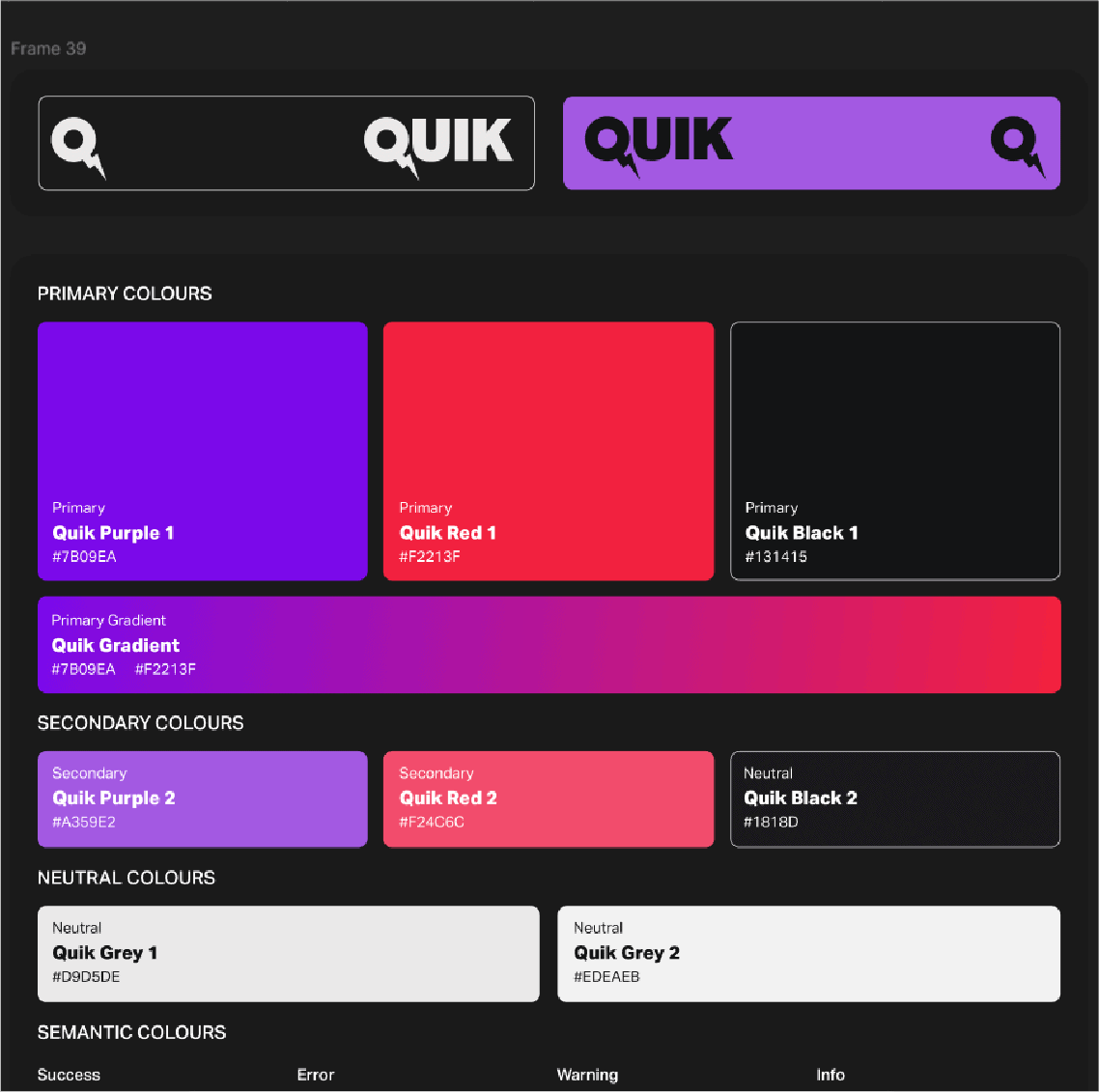
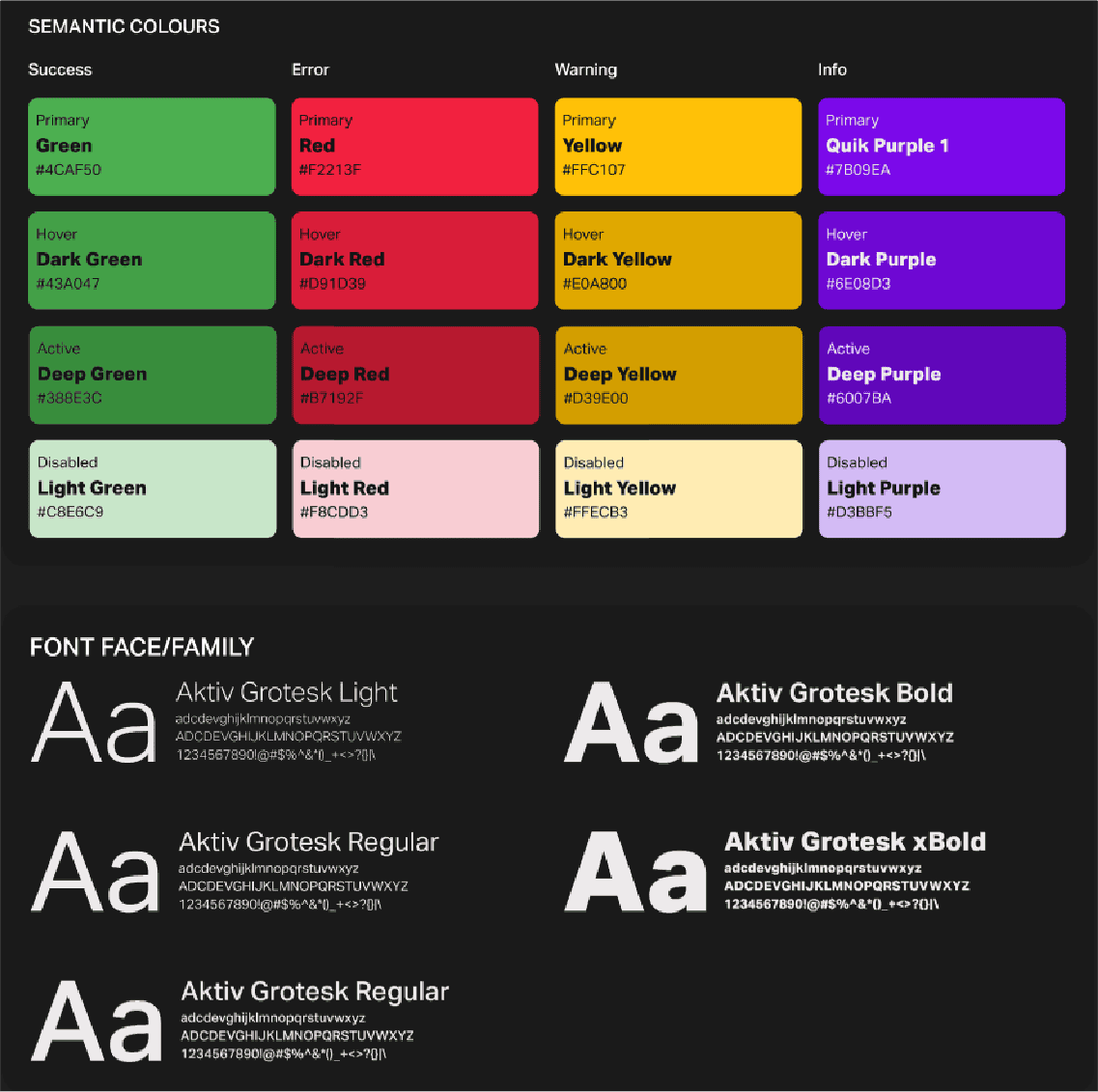
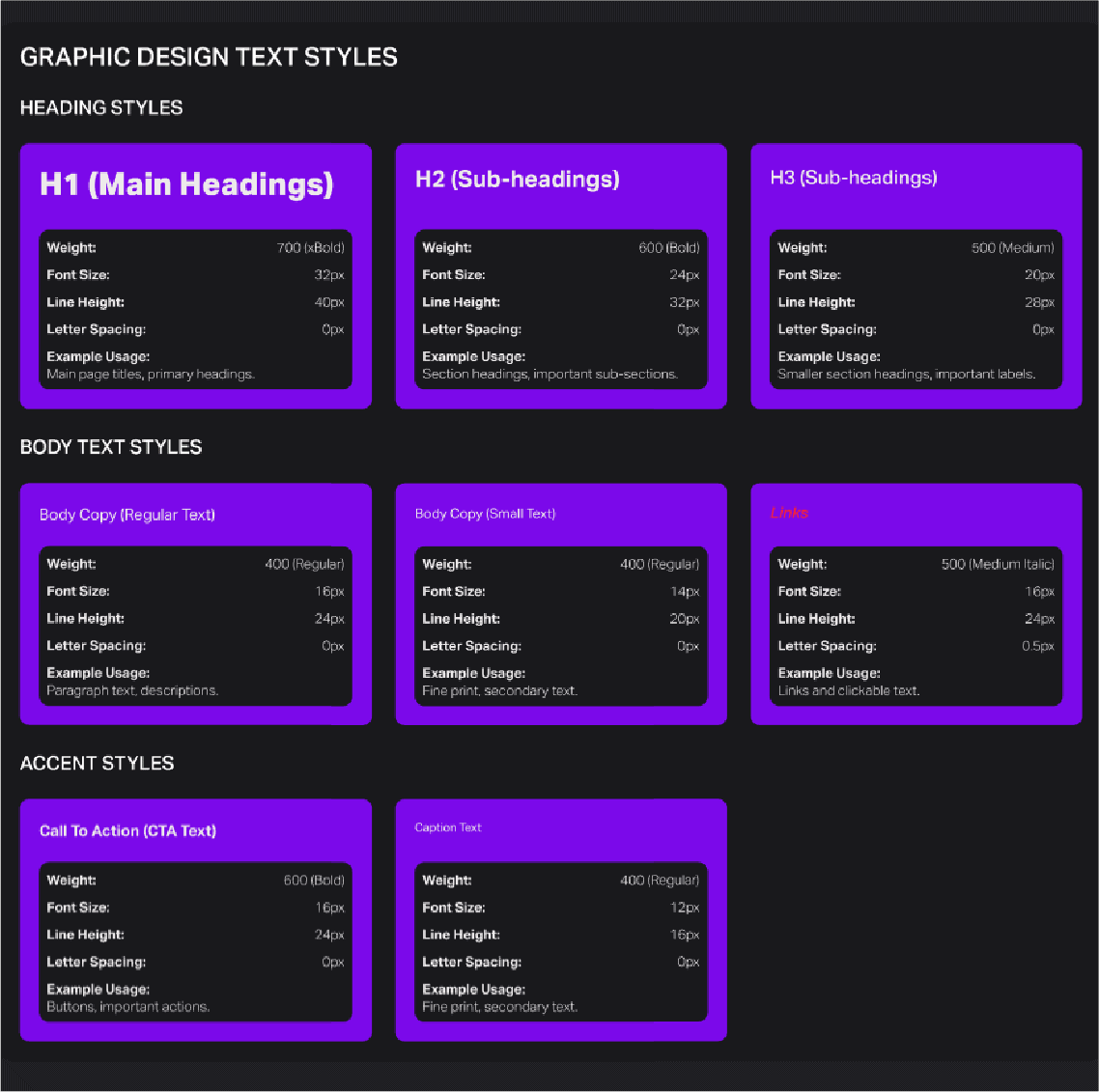
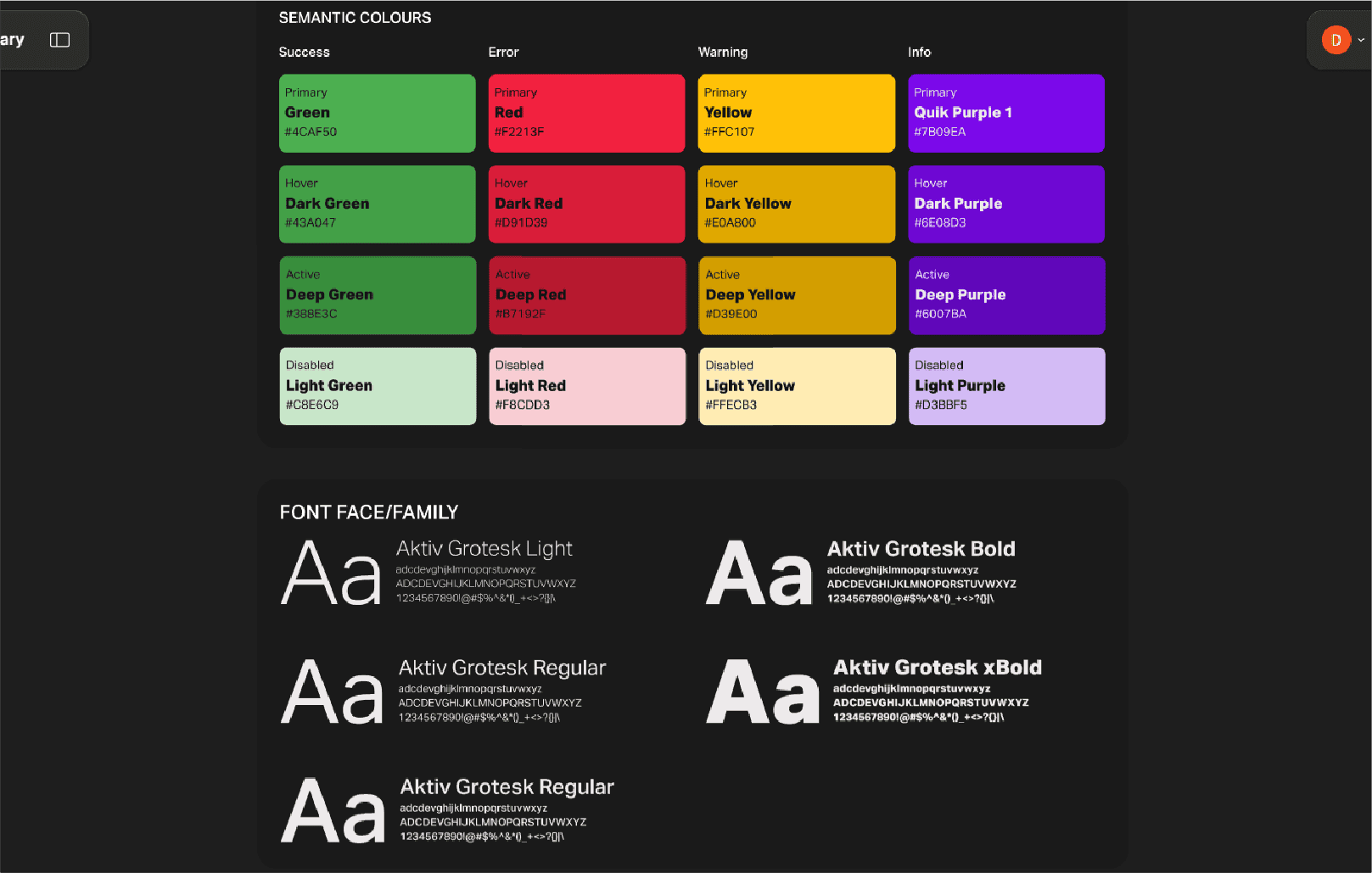
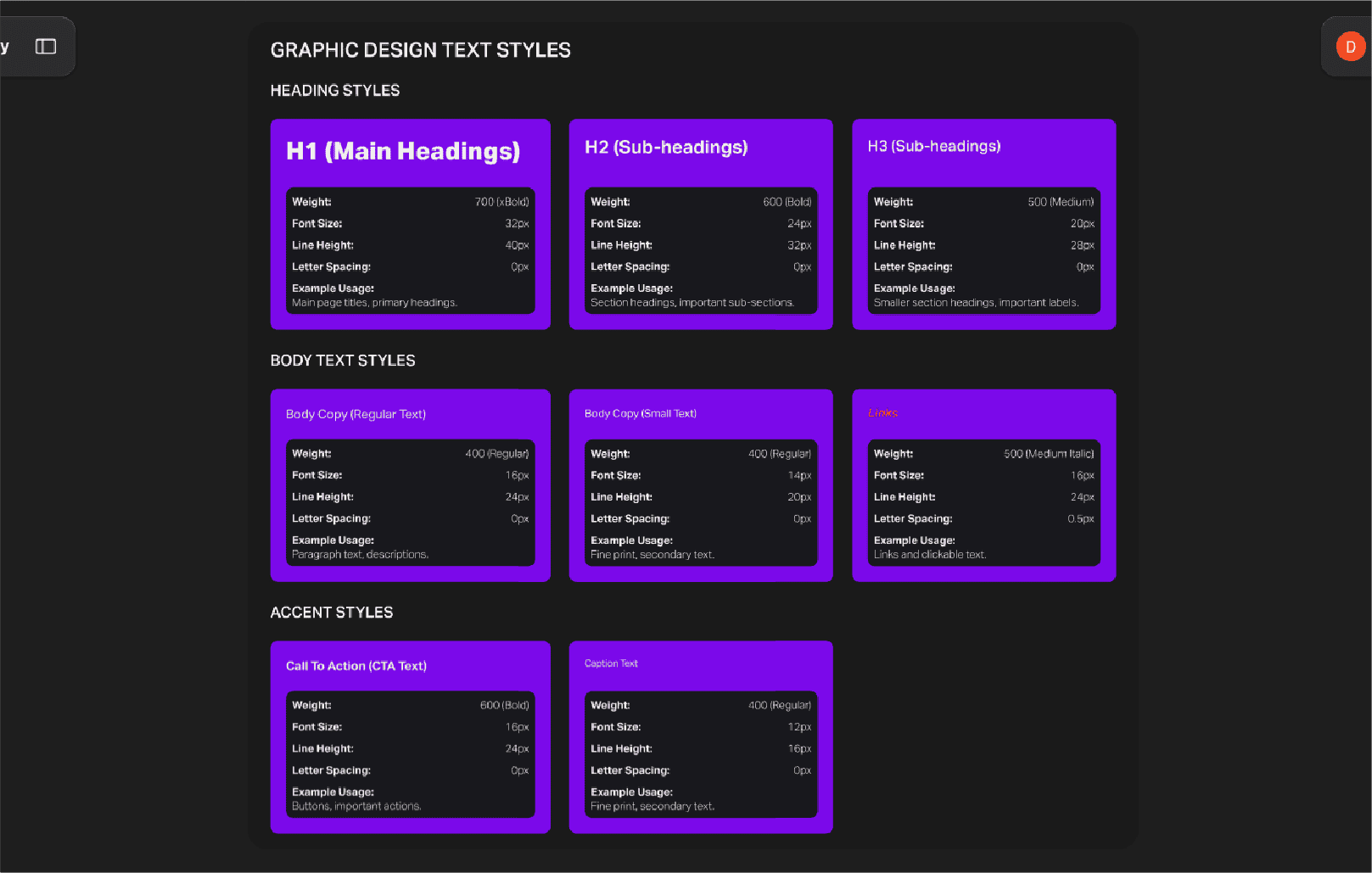
Implement a tokenized variable system for typography, color, spacing, and states.
Support light/dark themes and responsive layouts for multiple screen ratios.
Provide developer-ready documentation for seamless front-end integration.
2. Deliverables
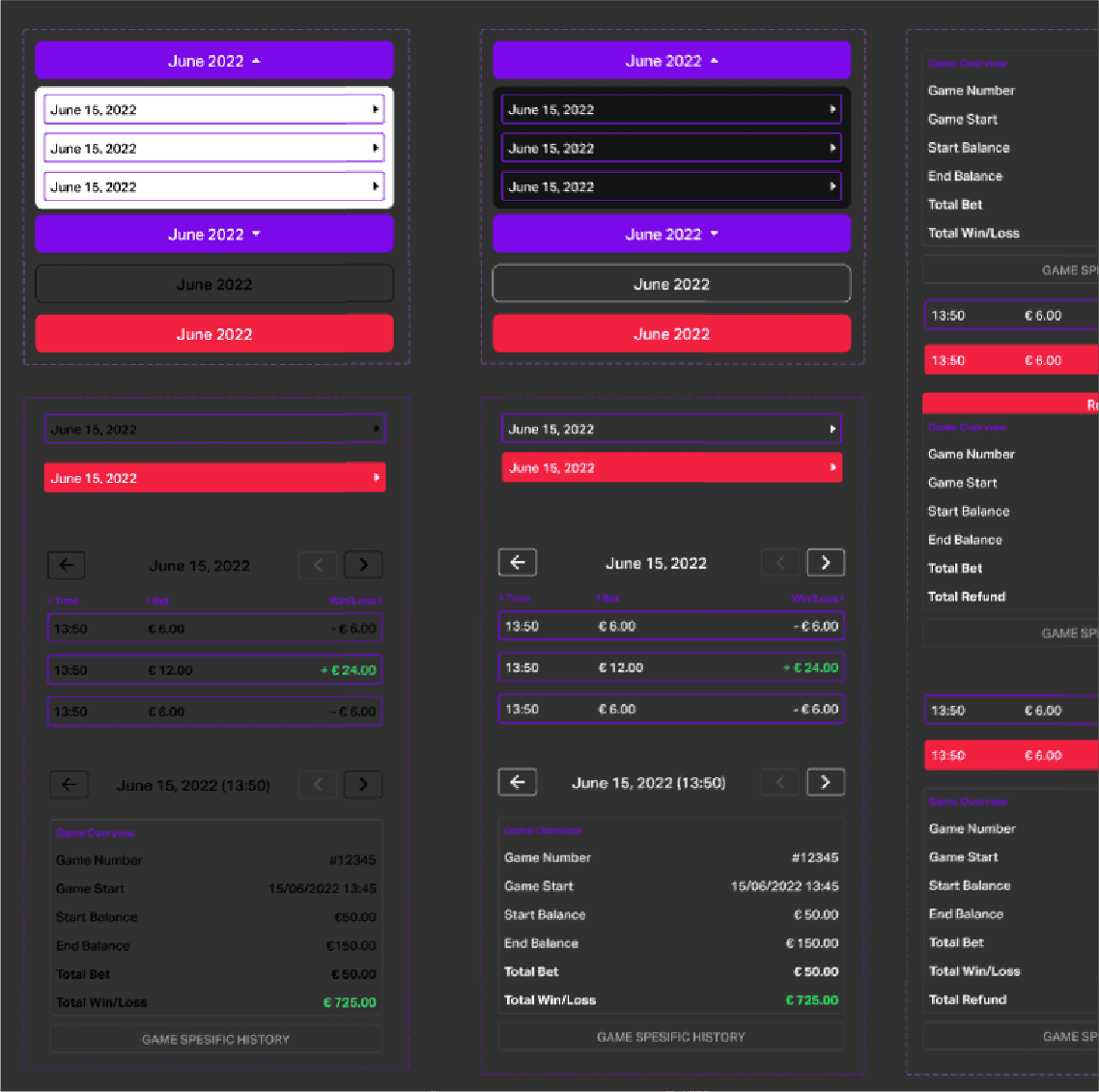
Complete Figma component library for shared UI elements (menus, modals, toggles, dropdowns).
Design tokens and variable architecture (colors, typography, spacing, radii, shadows).
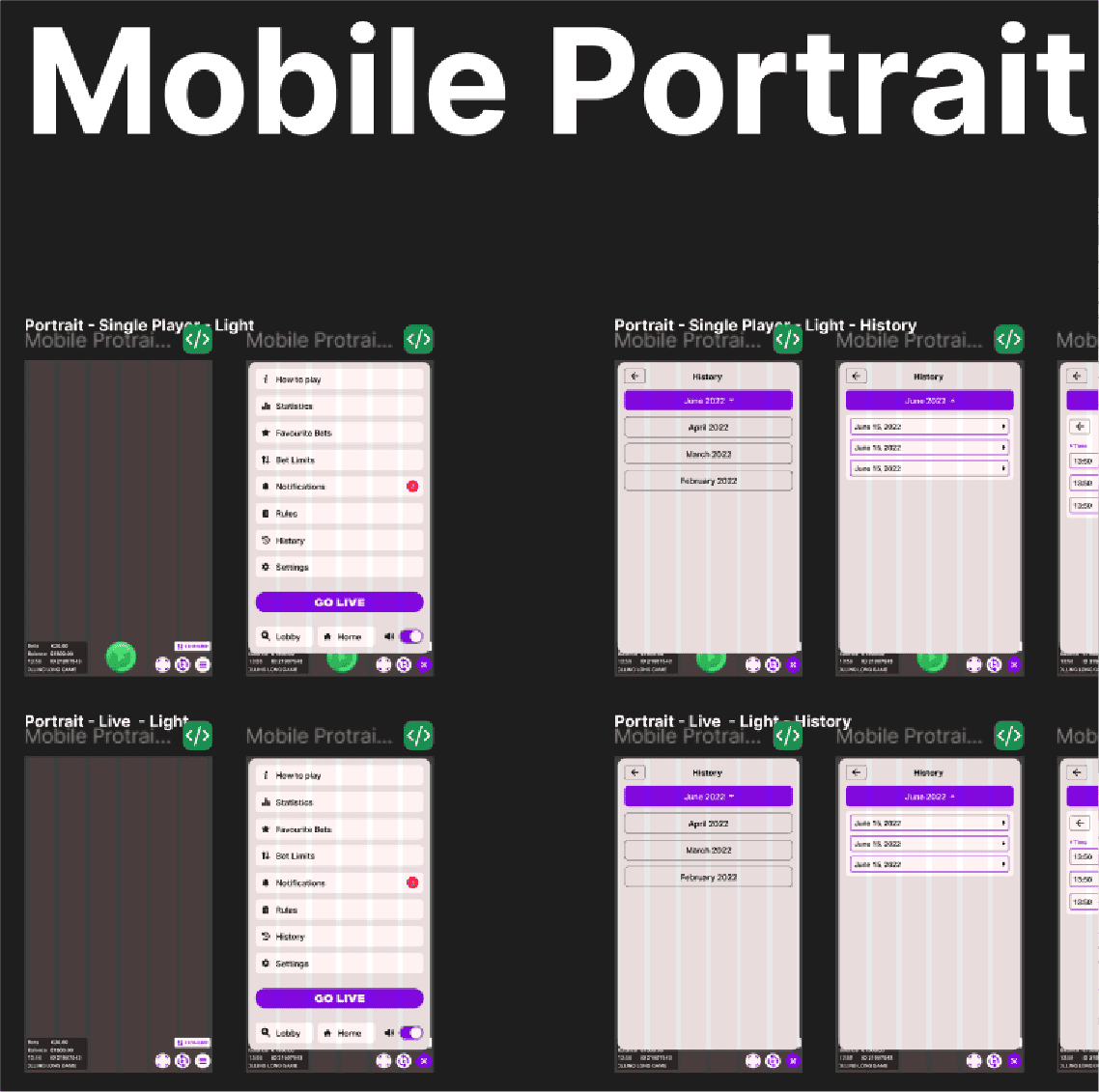
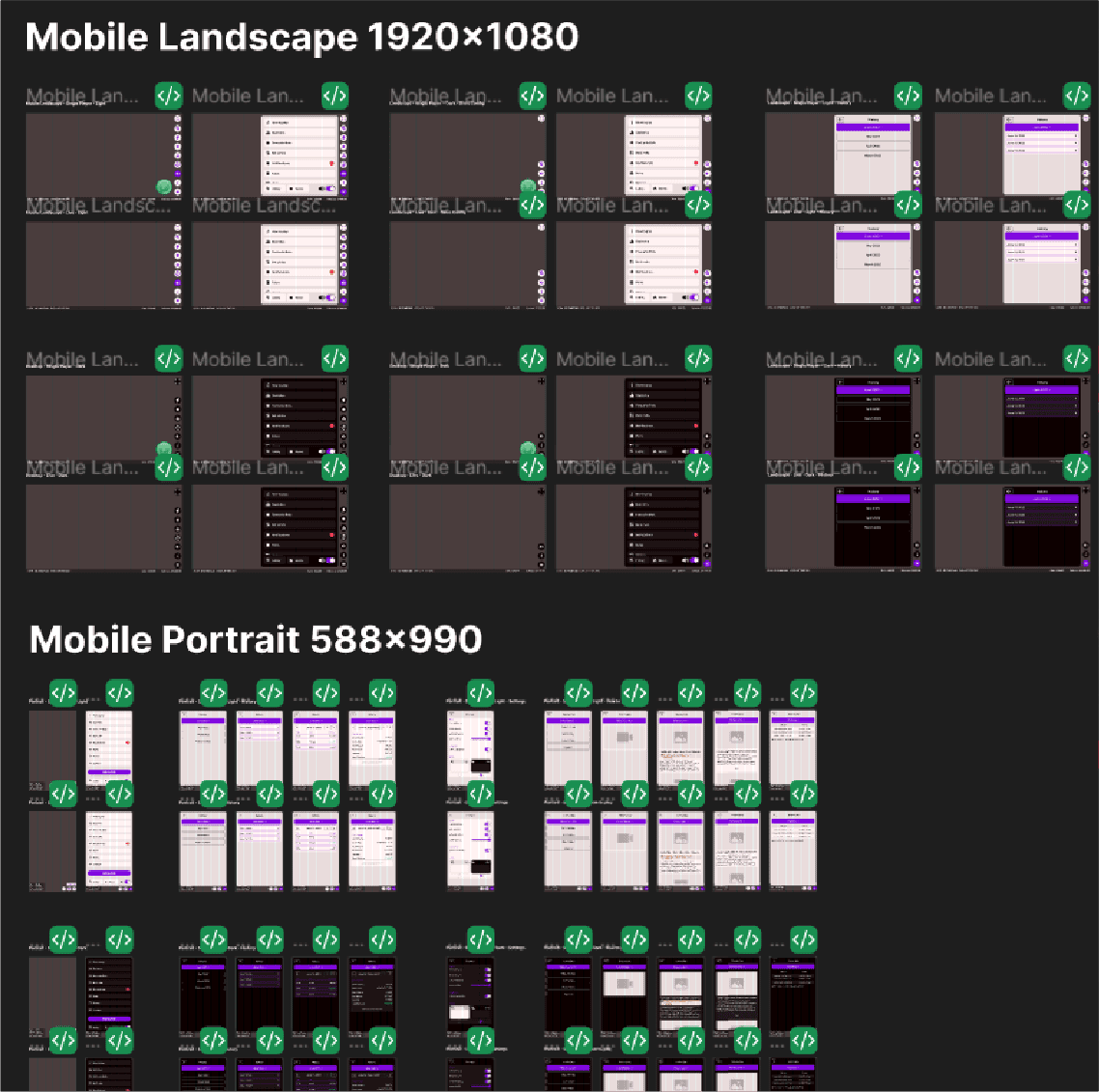
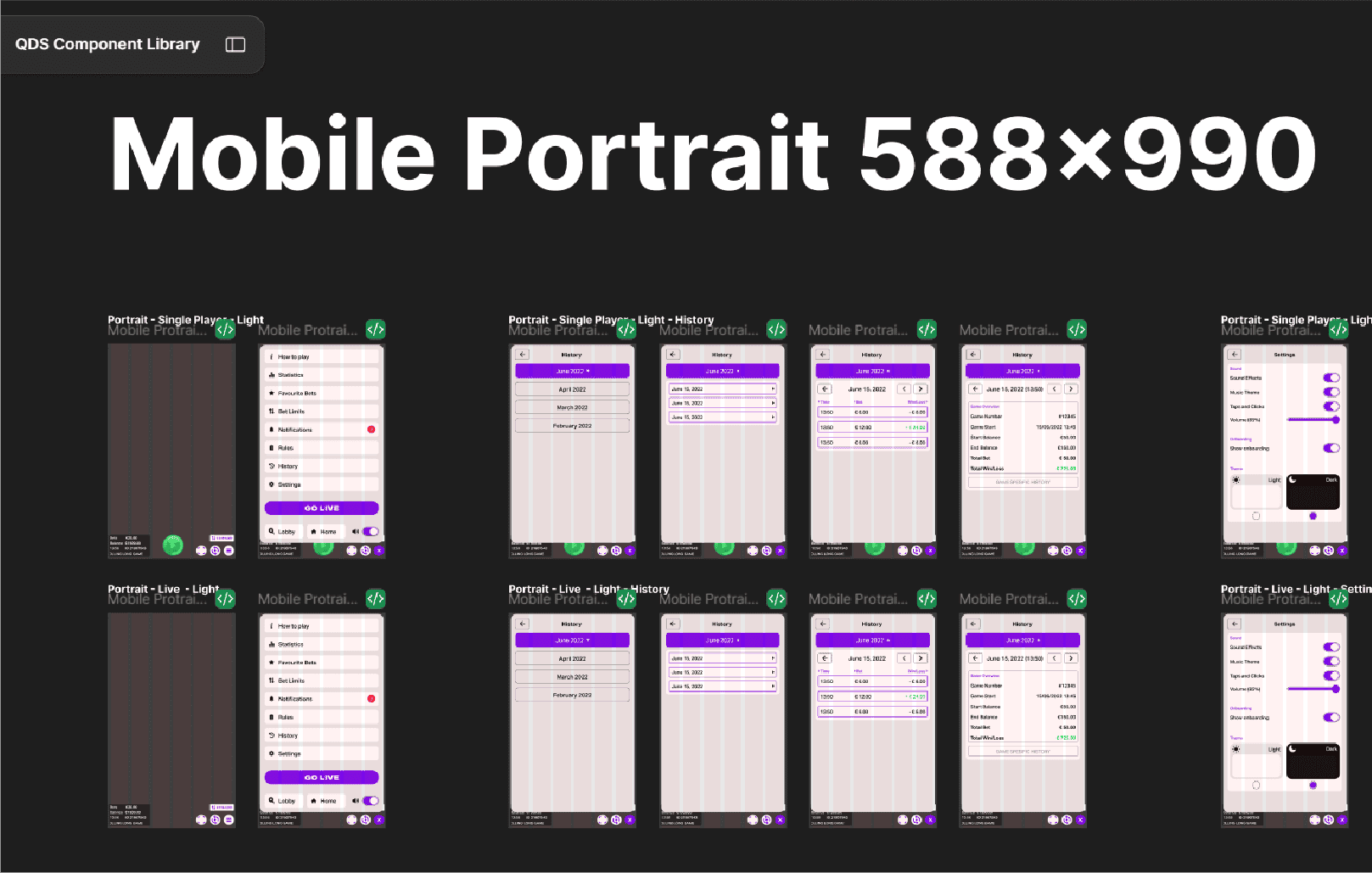
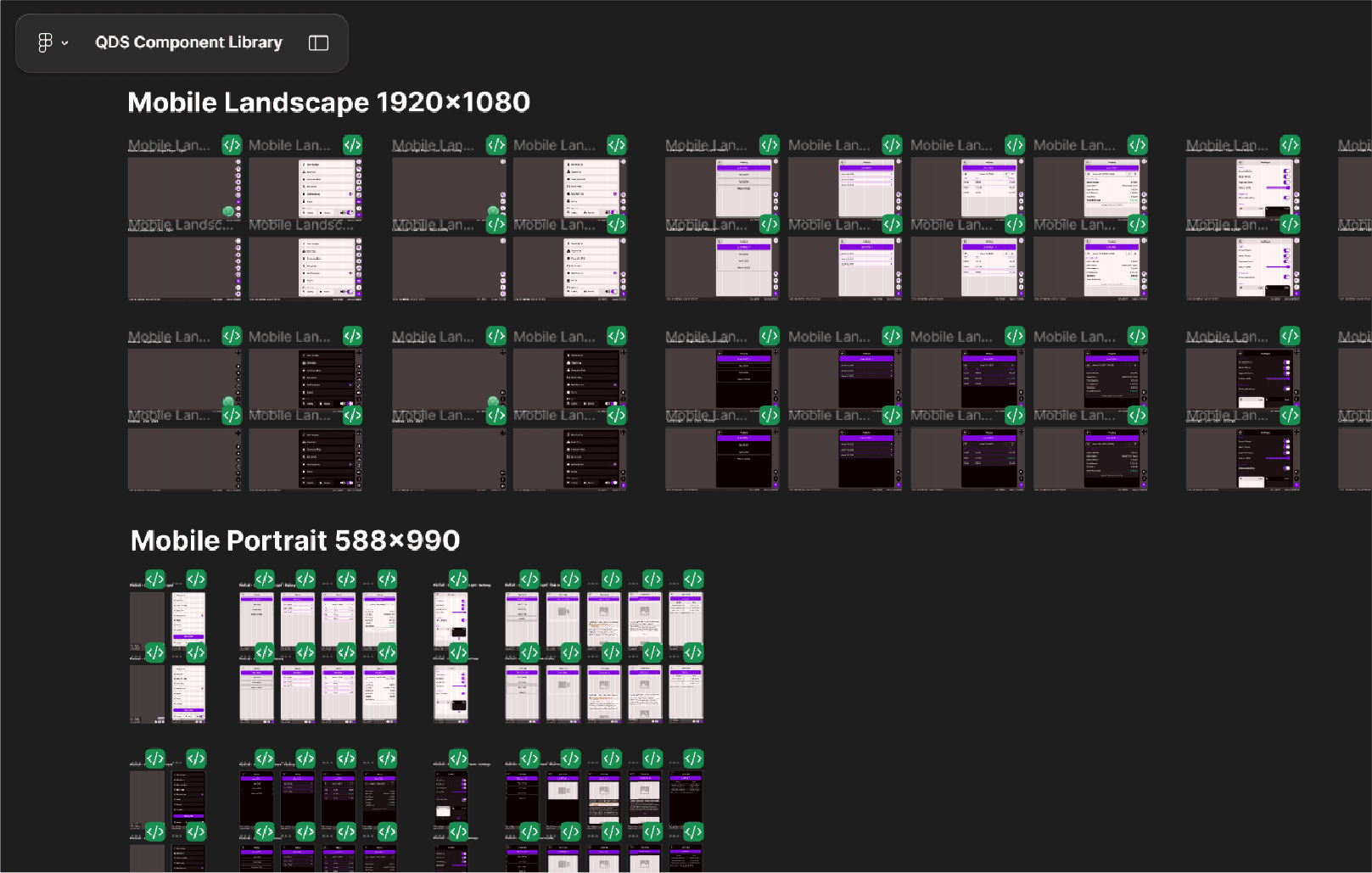
Responsive templates for Desktop (1920×1080), Mobile Landscape, and Mobile Portrait.
Developer documentation for token mapping and state behavior.
Versioned system updates allowing future scalability across new game types.
3. Outcome
The QDS became the core user interface foundation that all QUIK games rely on.
It unified the player experience, improved collaboration between teams, and drastically reduced redundant design work across multiple game types.
Today, whether a player opens a Lotto or Casino title, the underlying UX and system logic remain consistent — powered by the same QDS infrastructure.
4. Key Impact
Cross-product consistency: all QUIK titles share the same UI logic.
Faster game launches: new products integrate the existing QDS instantly.
Design & dev efficiency: reduced redundancy across teams.
Future-proof scalability: one system serving multiple game genres.