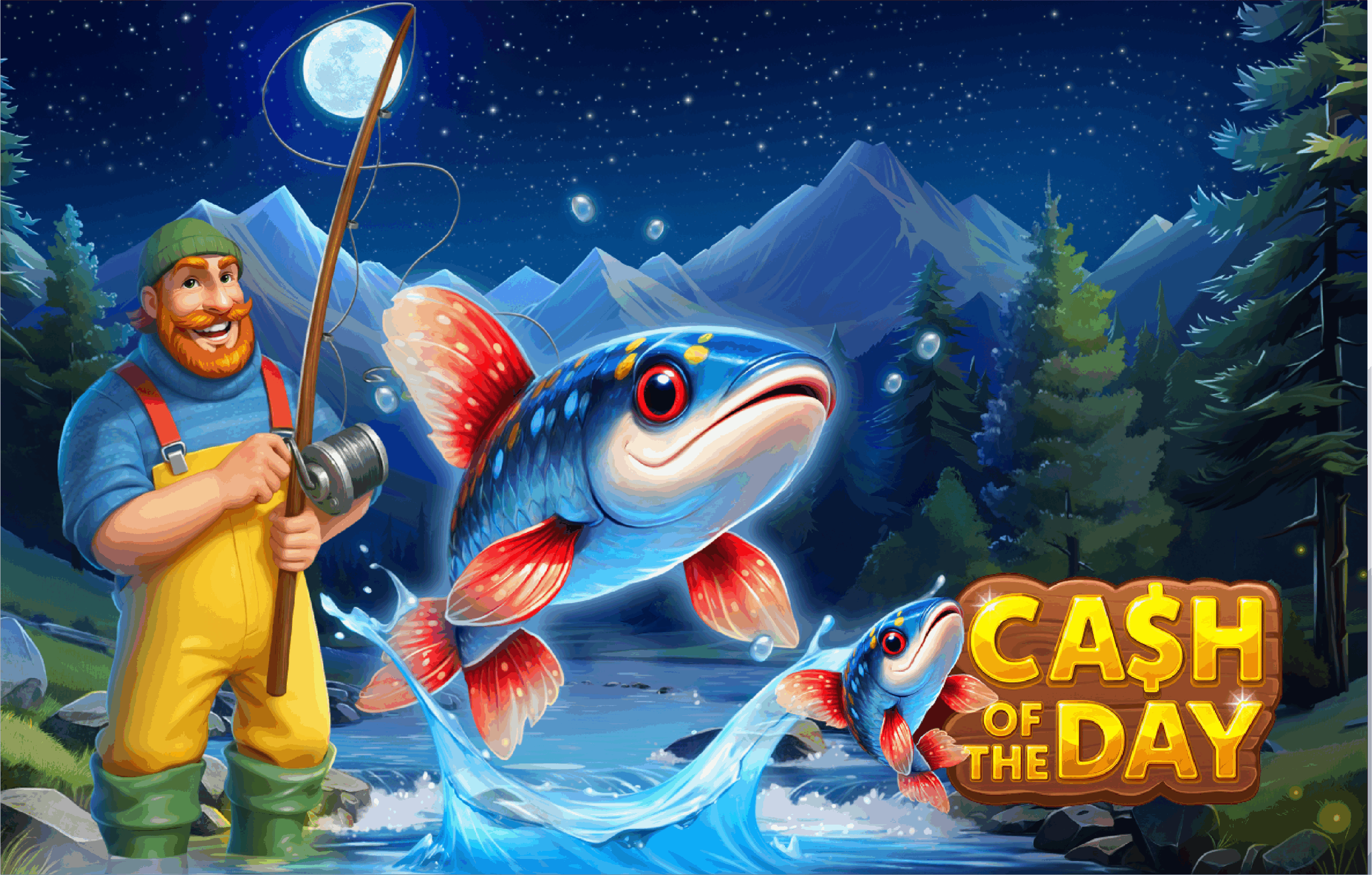
Cash of the Day is a fast-paced fishing-themed instant win game designed to deliver short, high-energy play sessions. My task was to translate the full game logic — including multiple bonus mechanics and grid-based win systems — into a coherent, testable player experience ready for developer implementation.
Project Case Study
1. The Objectives:
Build a fully mappable UX structure for every game and bonus state.
Prototype realistic instant-feedback interactions for all bonus features.
Ensure developer clarity through a clean Figma handover using imported art assets.
2. Process
I started by analyzing existing instant-win titles like Big Bass Bonanza and Cash Catcher to understand pacing, visual rhythm, and reward communication. Key takeaways:
Reward feedback needs to happen within 1.5 s to sustain engagement.
Bonus events should have distinct motion rhythms (e.g., faster spins = higher tension).
Maintain visual continuity when transitioning from grid to bonus screens.
3. Low-Fidelity Flow Mapping
This was the heart of the project. I created low-fidelity wireflows covering every possible bonus and outcome path in the game — including:
Super Catch Grid progression and unlock conditions.
Super Catch Bonus Spinner variations.
Edge cases like no zone selection, pending sessions, and interrupted bonuses.
🔹 Each collectable symbol, bonus trigger, and grid mechanic was diagrammed as a separate branch, ensuring developers and QA could visualize the entire player journey from spin 1 → final outcome.
4. High-Fidelity Prototype
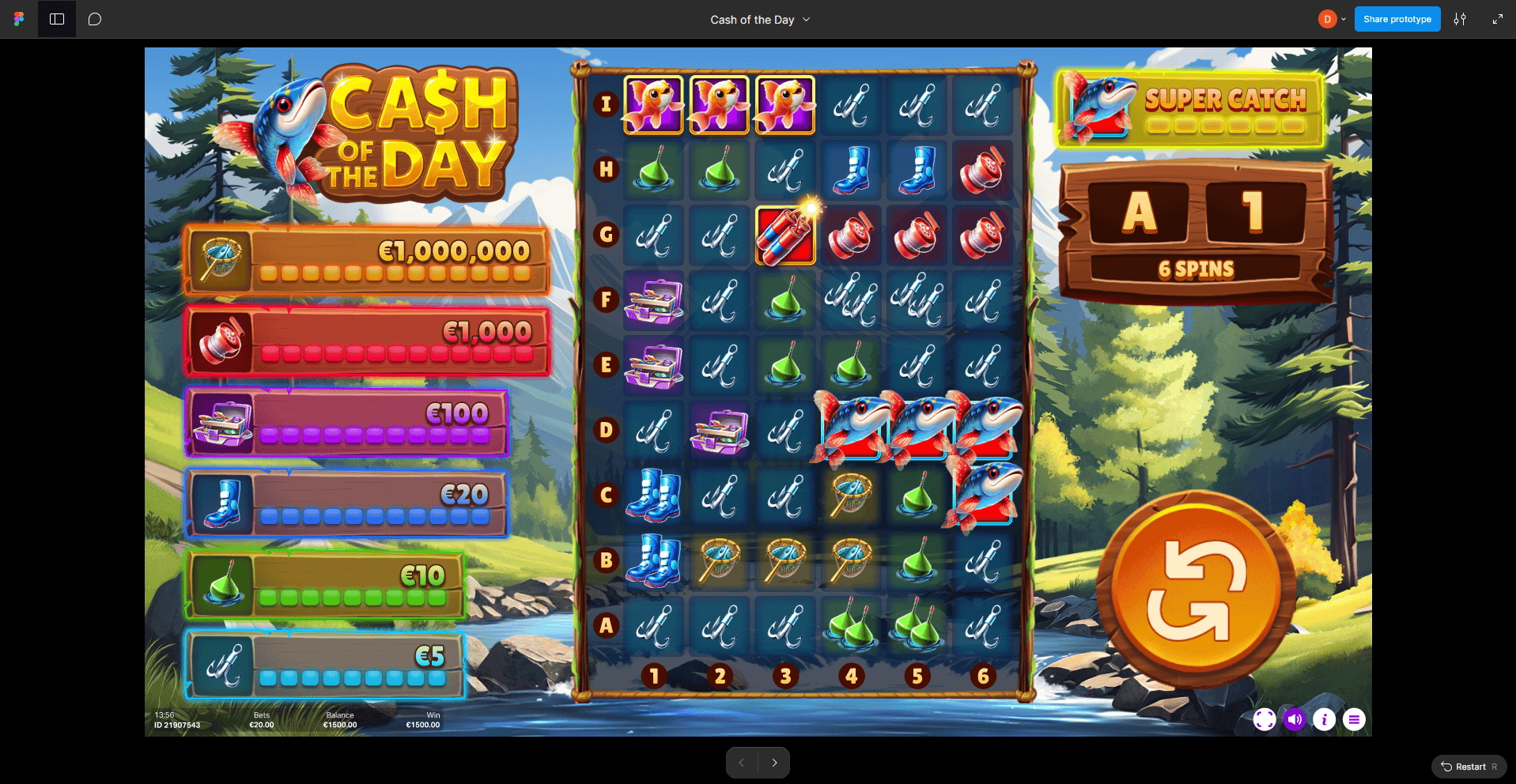
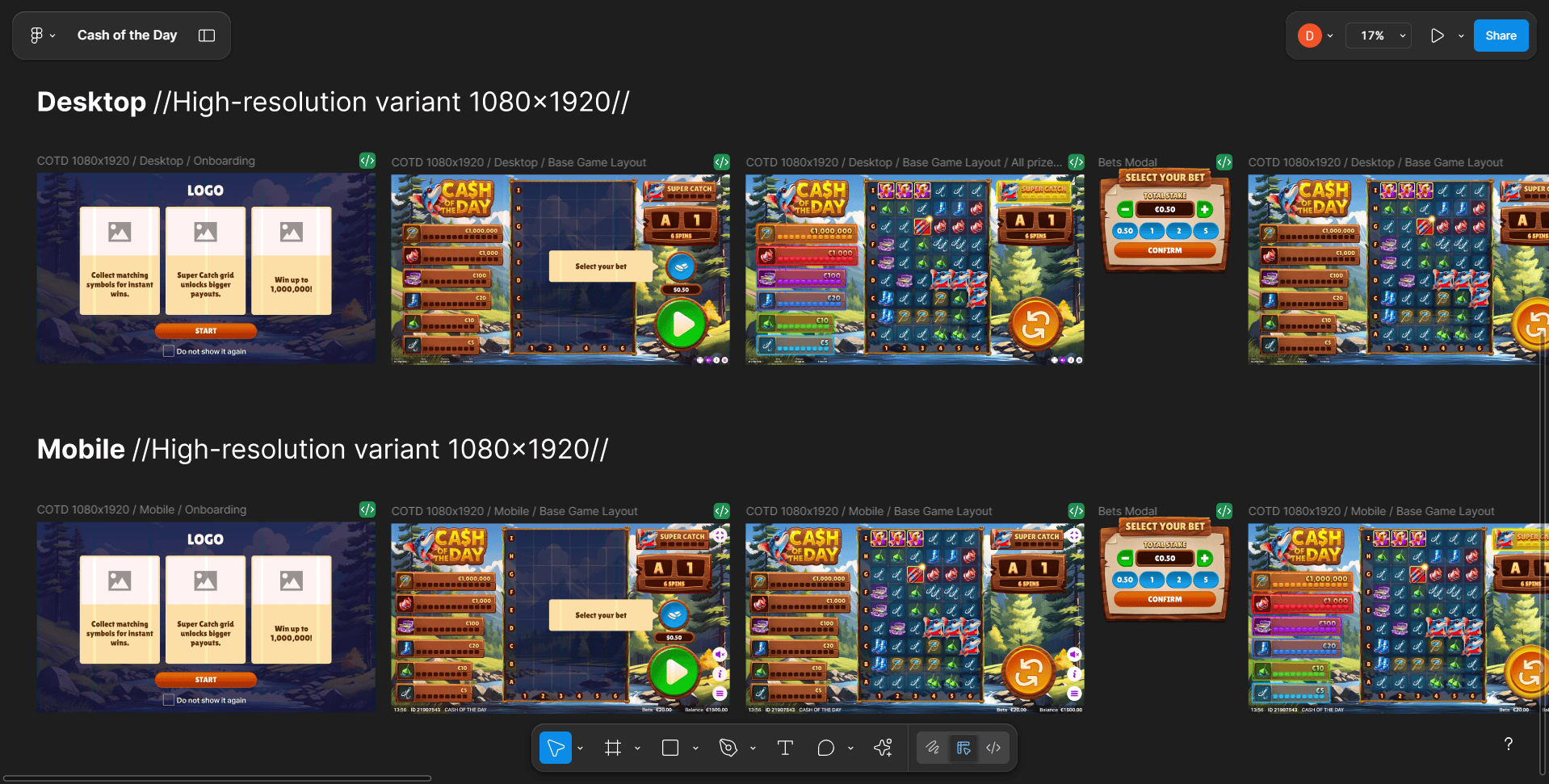
Once the logic and flows were validated, I built a complete interactive prototype in Figma:
Imported final art assets from Photoshop.
Applied component-based structure for reusability.
Replicated spinner animations, grid collection effects, and win-type transitions for realistic testing.
Ensured pixel accuracy for dev handoff (alignment, symbol spacing, hit-zones).
This prototype became the single source of truth for both development and QA.
5. Developer Handover
To streamline implementation:
I defined a design-to-dev library in Figma with interaction notes, asset naming conventions, and motion timing.
Documented bonus triggers, symbol states, and transition speeds so the engineers could mirror the gameplay feel exactly as tested.
Ensured art scaling and hitboxes matched responsive layout rules for WebGL export.
6. Visual Outcome
The final game delivers a vibrant, high-impact fishing experience, blending casual fun with strategic excitement.
Art and motion were crafted by the art team — I implemented and integrated them within the Figma prototype to achieve a realistic, interactive playtest environment.
7. Key Challenges & Solutions
Managing the complexity of multiple-layered bonuses: Created modular wireflows and clear hierarchy levels (Main → Bonus → Super Bonus)
Communicating dynamic game logic visually: Used colour-coded states and node-based annotations in Figma
Developer misalignment on symbol logic: Built a prototype simulating the 9×6 grid mechanics to clarify adjacency rules
8. Impact
Improved developer turnaround by ~30 % due to clear interaction documentation.
100 % parity between prototype and final product.
Became the reference framework for future instant-win titles within the studio.